
Raja Ram Mohan Roy & Brahmo Samaj
Raja Ram Mohan Roy, the Father of the Indian Renaissance, worked to reform Indian society by promoting monotheism, modern education, and social equality.
He founded the Brahmo Samaj in 1828 and played a crucial role in abolishing the Sati system and advocating women’s rights.
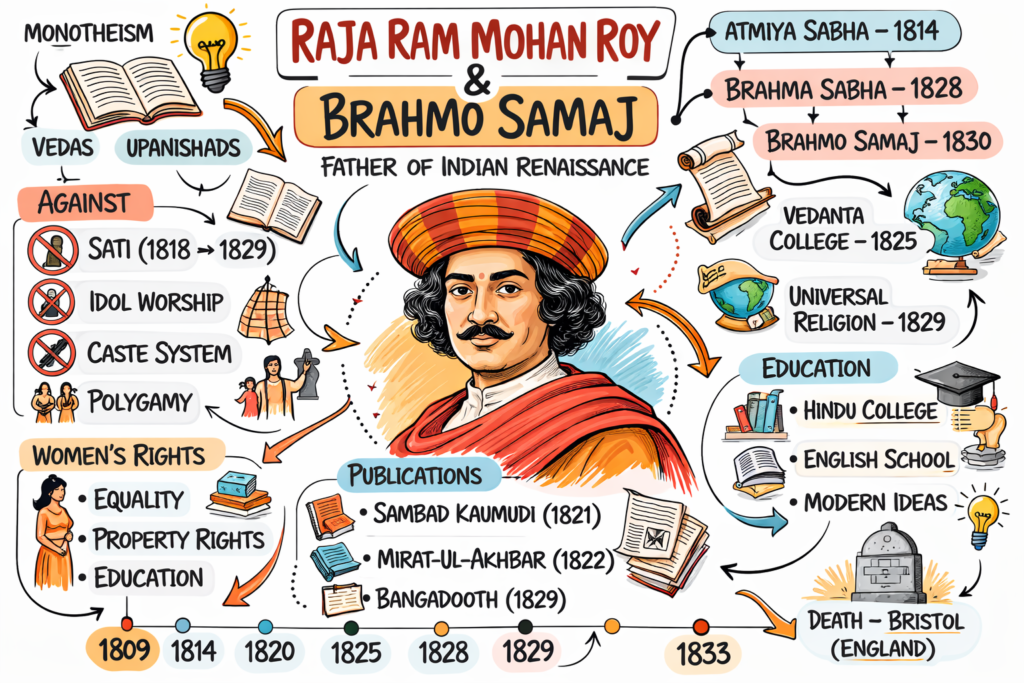
Raja Ram Mohan Roy & Brahmo Samaj (രാജാറാം മോഹൻറോയിയും ബ്രഹ്മസമാജവും)
Malayalam Explanation: ഇന്ത്യൻ നവോത്ഥാനത്തിൻ്റെ പിതാവാണ് രാജാറാം മോഹൻറോയ്. ആധുനിക ആശയങ്ങൾ ഉപയോഗിച്ച് ഇന്ത്യൻ സമൂഹത്തെ നവീകരിക്കാൻ അദ്ദേഹം ശ്രമിച്ചു. മനുഷ്യൻ്റെ മഹത്വം, സാമൂഹിക സമത്വം എന്നിവയിൽ അധിഷ്ഠിതമായ പ്രവർത്തനങ്ങൾക്ക് അദ്ദേഹം ആഹ്വാനം ചെയ്തു. ഏകദൈവ വിശ്വാസം പ്രചരിപ്പിക്കുന്നതിനായി അദ്ദേഹം പ്രവർത്തിക്കുകയും, വേദങ്ങളും ഉപനിഷത്തുകളും ഏകദൈവ വിശ്വാസത്തെയാണ് പിന്തുണയ്ക്കുന്നത് എന്ന് സ്ഥാപിക്കാൻ ശ്രമിക്കുകയും ചെയ്തു. സതി, വിഗ്രഹാരാധന, ജാതി വ്യവസ്ഥ എന്നിവയ്ക്കെതിരെ ശക്തമായി പോരാടിയ അദ്ദേഹം 1828-ൽ ബ്രഹ്മസഭ സ്ഥാപിച്ചു (പിന്നീട് ഇത് ബ്രഹ്മസമാജം എന്നറിയപ്പെട്ടു).
English Explanation: Raja Ram Mohan Roy is known as the Father of the Indian Renaissance. He utilised modern ideas to reform Indian society, advocating for activities firmly rooted in awakening human dignity and accepting social equality. To propagate monotheism, he translated Vedas and worked to prove that ancient Hindu concepts upheld monotheistic beliefs. He fought vigorously against Sati, idol worship, and the caste system, establishing the Brahma Sabha in 1828, which was later renamed the Brahmo Samaj.
——————————————————————————–
KEY FACTS (PSC/UPSC)
Malayalam: • സതിക്കെതിരെയുള്ള പോരാട്ടം: 1818 മുതൽ അദ്ദേഹം സതിക്കെതിരെ പ്രവർത്തിച്ചു. മരണാനന്തര ചടങ്ങുകളിൽ പങ്കെടുക്കുകയും, രഹസ്യ സംഘങ്ങളെ അന്വേഷണത്തിനായി നിയമിക്കുകയും ചെയ്തു. ഇതിൻ്റെ ഫലമായി 1829 ഡിസംബർ 4-ന് വില്യം ബെൻ്റിക് പ്രഭു സതി നിരോധിച്ചു.
• സ്തീകളുടെ അവകാശങ്ങൾ: സ്തീകളെ പൊതുവായി കീഴ്പ്പെടുത്തുന്നതിനെ അദ്ദേഹം അപലപിച്ചു. ബഹുഭാര്യാത്വത്തെ വിമർശിക്കുകയും സ്ത്രീകൾക്ക് സ്വത്തവകാശവും അനന്തരാവകാശവും നൽകണമെന്ന് ആവശ്യപ്പെടുകയും ചെയ്തു.
• വിദ്യാഭ്യാസ രംഗം: ഇന്ത്യക്കാർക്കിടയിൽ ആധുനിക വിദ്യാഭ്യാസം കൊണ്ടുവരാൻ ശ്രമിച്ചു. ഡേവിഡ് ഹെയർ സ്ഥാപിച്ച ഹിന്ദു കോളേജിനെ അദ്ദേഹം പിന്തുണച്ചു. തൻ്റെ ഇംഗ്ലീഷ് സ്കൂളിലൂടെ വോൾട്ടയറുടെ ഫിലോസഫിയും മെക്കാനിക്സും പഠിപ്പിച്ചു. 1825-ൽ വേദാന്ത കോളേജ് സ്ഥാപിച്ചു.
• പത്രപ്രവർത്തനം: ഇന്ത്യൻ ദേശീയ പത്രപ്രവർത്തനത്തിൻ്റെ സ്ഥാപകൻ. സംസ്കൃതം, പേർഷ്യൻ, അറബിക്, ഇംഗ്ലീഷ്, ഫ്രഞ്ച്, ലാറ്റിൻ, ഗ്രീക്ക്, ഹീബ്രു എന്നീ ഭാഷകൾ അദ്ദേഹം കൈകാര്യം ചെയ്തിരുന്നു. ബംഗാളി, ഹിന്ദി, ഇംഗ്ലീഷ്, പേർഷ്യൻ ഭാഷകളിൽ ലേഖനങ്ങൾ എഴുതി.
• മതപരമായ കാഴ്ചപ്പാടുകൾ: പുതിയ ഒരു മതം സ്ഥാപിക്കുക എന്നതായിരുന്നില്ല അദ്ദേഹത്തിൻ്റെ ലക്ഷ്യം, മറിച്ച് ഹിന്ദുമതത്തിലെ അനാചാരങ്ങൾ ഒഴിവാക്കി അതിനെ ശുദ്ധീകരിക്കുക എന്നതായിരുന്നു. ക്രിസ്തുവിൻ്റെ സന്ദേശം ഹിന്ദുമതത്തിൽ ഉൾപ്പെടുത്തണമെന്ന അദ്ദേഹത്തിൻ്റെ വാദം അന്നത്തെ ക്രൈസ്തവ പുരോഹിതരുടെ എതിർപ്പിന് കാരണമായി.
English: • Campaign against Sati: Worked against Sati from 1818. He attended funeral ceremonies and appointed secret groups for inquiry. His efforts led Governor-General Lord William Bentinck to ban Sati on December 4, 1829.
• Women’s Rights: Condemned the general subordination of women. He criticized polygamy and demanded inheritance and property rights for women.
• Educational Field: Tried to introduce modern education. Supported the establishment of Hindu College founded by David Hare. Taught mechanics and Voltaire’s philosophy in his English school and founded Vedanta College in 1825.
• Journalism: Founder of Indian national journalism. Knew Sanskrit, Persian, Arabic, English, French, Latin, Greek, and Hebrew. Wrote in Bengali, Hindi, English, and Persian.
• Religious Views: His aim was not to found a new religion, but to reform Hindu practices by removing social evils. His argument that Christ’s message should be incorporated into Hinduism provoked the Christian clergy.
——————————————————————————–
IMPORTANT YEARS
Malayalam: • ഗിഫ്റ്റ് ടു മോണോതീസ്റ്റ്സ് (Gift to Monotheists) രചിച്ചത് — 1809
• ആത്മീയ സഭ (Atmiya Sabha) സ്ഥാപിച്ചത് — 1814 (ചില രേഖകളിൽ 1815)
• വേദാന്ത ഗ്രന്ഥം പ്രസിദ്ധീകരിച്ചത് — 1815
• സതിക്കെതിരെ പ്രവർത്തിക്കാൻ തുടങ്ങിയത് — 1818
• പ്രിസെപ്റ്റ്സ് ഓഫ് ജീസസ് (The Precepts of Jesus) — 1820
• എ ഡിഫൻസ് ഓഫ് ഹിന്ദു തീസം (A Defence of Hindu Theism) — 1820
• സംവാദ് കൗമുദി പത്രം (ബംഗാളി) — 1821
• മിറാത്ത്-ഉൽ-അഖ്ബർ (പേർഷ്യൻ പത്രം) — 1822
• വേദാന്ത കോളേജ് സ്ഥാപിച്ചത് — 1825
• ബംഗാളി ഗ്രാമർ പ്രസിദ്ധീകരിച്ചത് — 1826
• ബ്രഹ്മസഭ സ്ഥാപിച്ചത് — 1828 (ആഗസ്റ്റ് 20)
• സതി നിരോധനം, ബംഗാദൂത് പത്രം, യൂണിവേഴ്സൽ റിലീജിയൻ, ഹിസ്റ്ററി ഓഫ് ഇന്ത്യൻ ഫിലോസഫി — 1829
• ബ്രഹ്മസഭ ‘ബ്രഹ്മസമാജം’ എന്ന് പുനർനാമകരണം ചെയ്തത് — 1830
• രാജാറാം മോഹൻറോയിയുടെ മരണം — 1833
English: • Gift to Monotheists written — 1809
• Atmiya Sabha founded — 1814/1815
• Vedanta Grantha published — 1815
• Started campaign against Sati — 1818
• The Precepts of Jesus published — 1820
• A Defence of Hindu Theism published — 1820
• Sambad Kaumudi (Bengali weekly) started — 1821
• Mirat-ul-Akhbar (Persian) started — 1822
• Vedanta College founded — 1825
• Bengali Grammar published — 1826
• Brahma Sabha founded — 1828 (August 20)
• Ban on Sati, Bangadooth paper, The Universal Religion, History of Indian Philosophy — 1829
• Renamed to Brahmo Samaj — 1830 • Death of Raja Ram Mohan Roy — 1833
——————————————————————————–
IMPORTANT PERSONALITIES
Malayalam: • രാജാറാം മോഹൻറോയ് — ഇന്ത്യൻ നവോത്ഥാനത്തിൻ്റെ പിതാവ്, ബ്രഹ്മസമാജ സ്ഥാപകൻ. അന്ത്യവിശ്രമം കൊള്ളുന്നത് ഇംഗ്ലണ്ടിലെ ബ്രിസ്റ്റോളിലുള്ള അർണോസ് വാലെ ശ്മശാനത്തിലാണ് (Arnos Vale Cemetery).
• മേരി കാർപെൻ്റർ — രാജാറാം മോഹൻറോയിയുടെ ജീവചരിത്രകാരി.
• മോണിയർ വില്യംസ് — മതങ്ങളെ താരതമ്യം ചെയ്തു പഠിച്ച ആദ്യ അന്വേഷകൻ എന്ന് രാജാറാം മോഹൻറോയിയെ വിശേഷിപ്പിച്ചു.
• വില്യം ബെൻ്റിക് പ്രഭു — രാജാറാം മോഹൻറോയിയുടെ ശ്രമഫലമായി 1829-ൽ സതി നിരോധിച്ച ഗവർണർ ജനറൽ.
• വില്യം ആദം — രാജാറാം മോഹൻറോയിക്കൊപ്പം ചേർന്ന് ‘യൂണിറ്റേറിയൻ അസോസിയേഷൻ’ (Unitarian Association) സ്ഥാപിച്ചു.
• ഡേവിഡ് ഹെയർ — ഹിന്ദു കോളേജ് സ്ഥാപകൻ (രാജാറാം മോഹൻറോയ് പിന്തുണച്ചു).
• രാധാകാന്ത് ദേവ് — ബ്രഹ്മസമാജത്തിനെതിരെ ‘ധർമ്മ സഭ’ (Dharma Sabha) സ്ഥാപിച്ച വ്യക്തി.
English: • Raja Ram Mohan Roy — Father of Indian Renaissance, founder of Brahmo Samaj. His final resting place is Arnos Vale Cemetery in Bristol, England. • Mary Carpenter — The biographer of Raja Ram Mohan Roy.
• Monier Williams — Described Roy as the first investigator to study religions comparatively.
• Lord William Bentinck — The Governor-General who banned Sati in 1829 due to Roy’s efforts.
• William Adam — Co-founded the Unitarian Association along with Ram Mohan Roy.
• David Hare — Founded the Hindu College (supported by Roy). • Raja Radhakanta Deb — Opposed Brahmo Samaj by establishing the Dharma Sabha.
——————————————————————————–
MOVEMENTS / ORGANISATIONS
Malayalam: • ആത്മീയ സഭ (Atmiya Sabha) — രാജാറാം മോഹൻറോയ് — 1814 — വിഗ്രഹാരാധന, ജാതീയത, സാമൂഹിക അരാജകത്വം എന്നിവയെ എതിർക്കാൻ.
• ബ്രഹ്മസഭ / ബ്രഹ്മസമാജം — രാജാറാം മോഹൻറോയ് — 1828 / 1830 — ഹിന്ദുമതത്തെ ശുദ്ധീകരിക്കാനും ഉപനിഷത്തുകളുടെയും വേദങ്ങളുടെയും അടിസ്ഥാനത്തിൽ ഏകദൈവ വിശ്വാസം പ്രചരിപ്പിക്കാനും.
• യൂണിറ്റേറിയൻ അസോസിയേഷൻ — രാജാറാം മോഹൻറോയ് & വില്യം ആദം — (വർഷം ഇല്ല) — സാമൂഹിക നവീകരണത്തിന്.
English: • Atmiya Sabha — Raja Ram Mohan Roy — 1814 — To oppose idol worship, caste divisions, and social evils.
• Brahma Sabha / Brahmo Samaj — Raja Ram Mohan Roy — 1828 / 1830 — To purify Hinduism and propagate monotheism based on Vedas and Upanishads.
• Unitarian Association — Raja Ram Mohan Roy & William Adam — (Year not given) — For progressive social change.
——————————————————————————–
EXAM POINTS
• One-word facts:
- “ജാതിസമ്പ്രദായമാണ് ഇന്ത്യൻ ജനതയുടെ അനൈക്യത്തിൻ്റെ അടിസ്ഥാന കാരണം” (The caste system was the fundamental reason for the disunity of the Indian people) എന്ന് പറഞ്ഞത്? രാജാറാം മോഹൻറോയ്.
- രാജാറാം മോഹൻറോയിയുടെ ജീവചരിത്രകാരി? മേരി കാർപെൻ്റർ (Mary Carpenter).
- രാജാറാം മോഹൻറോയിയുടെ അന്ത്യവിശ്രമ സ്ഥലം? അർണോസ് വാലെ ശ്മശാനം, ബ്രിസ്റ്റോൾ, ഇംഗ്ലണ്ട് (Arnos Vale Cemetery, Bristol).
- ആത്മീയ സഭ സ്ഥാപിക്കപ്പെട്ട വർഷം? 1814.
- • Books & Newspapers (Match-the-following format):
- Tufath-Ul-Muvahidhin – Ram Mohan Roy
- The Precepts of Jesus (1820) – Ram Mohan Roy
- Sambad Kaumudi (1821) – Ram Mohan Roy (Bengali weekly)
- Mirat-ul-Akhbar (1822) – Ram Mohan Roy (Persian newspaper)
- Bangadooth (1829) – Ram Mohan Roy • Statement-type facts:
- ബ്രഹ്മസമാജത്തിൻ്റെ ലക്ഷ്യം പുതിയ മതം സ്ഥാപിക്കുക എന്നതായിരുന്നില്ല, മറിച്ച് ഹിന്ദു മതത്തിലെ അനാചാരങ്ങൾ മാറ്റുക എന്നതായിരുന്നു (Roy’s aim was not to found a new religion, but to reform Hindu practices).
- “വേദാന്തം യുക്തിയെ അടിസ്ഥാനമാക്കിയുള്ളതാണെന്നും, യുക്തി ആവശ്യപ്പെടുന്നപക്ഷം വേദഗ്രന്ഥങ്ങളിൽ നിന്നുള്ള വ്യതിചലനം പോലും ന്യായീകരിക്കാമെന്നും” അദ്ദേഹം പ്രഖ്യാപിച്ചു (Vedanta is based on reason, and deviation from Vedic scriptures can be justified if reason demands).
——————————————————————————–
QUICK REVISION
Malayalam Summary: ഇന്ത്യൻ നവോത്ഥാനത്തിൻ്റെ പിതാവായ രാജാറാം മോഹൻറോയ് ഏകദൈവ വിശ്വാസം പ്രചരിപ്പിക്കാൻ 1814-ൽ ആത്മീയ സഭയും 1828-ൽ ബ്രഹ്മസമാജവും സ്ഥാപിച്ചു. സതിക്കെതിരെ അദ്ദേഹം നടത്തിയ പോരാട്ടം 1829-ൽ സതി നിരോധനത്തിന് കാരണമായി. മിറാത്ത്-ഉൽ-അഖ്ബർ, സംവാദ് കൗമുദി എന്നിവ അദ്ദേഹത്തിൻ്റെ പ്രധാന പത്രങ്ങളാണ്. മതങ്ങളെ താരതമ്യം ചെയ്ത ആദ്യ അന്വേഷകനായി മോണിയർ വില്യംസ് ഇദ്ദേഹത്തെ വിശേഷിപ്പിച്ചു. 1833-ൽ ഇംഗ്ലണ്ടിലെ ബ്രിസ്റ്റോളിലാണ് അദ്ദേഹം അന്തരിച്ചത്.
English Summary: Raja Ram Mohan Roy, the Father of the Indian Renaissance, founded the Atmiya Sabha in 1814 and the Brahmo Samaj in 1828 to promote monotheism and eradicate social evils. His relentless campaign led to the abolition of Sati in 1829. His major newspapers included Mirat-ul-Akhbar and Sambad Kaumudi. Monier Williams called him the first comparative investigator of religions. He passed away in Bristol, England, in 1833.